Running an online store in Bangladesh is exciting but also full of challenges. Every day, you handle marketing, orders, shipping, and accounts. If you do these tasks manually, it takes a lot of time, and mistakes can happen easily. This is where ecommerce automation can make a huge difference. Imagine your business running smoothly, with software working 24/7 to handle repetitive jobs. Not only does this save you time, but it also reduces costly errors and helps you earn more profit.
But automation is more than just a time-saver. It can change your entire business. For example, instead of worrying about missing an order during a busy festival season, your automated system confirms every sale and updates your inventory in real time.
You can focus on building your brand, planning new products, or expanding to new markets—all while the routine work happens in the background.
Let’s explore what ecommerce automation is, how it works, and how you can use it in your business in Bangladesh. You will learn about different types of automation—marketing, orders, shipping, and accounting. You will also get practical tips for building a scalable, automated ecommerce business.
If you want to grow fast and smart, automation is your path forward.
Ecommerce automation means using software and technology to do routine tasks in your online store, without manual effort. Instead of you or your staff doing everything by hand, automation tools can send emails, update your inventory, process orders, print shipping labels, and even handle accounting.
This is not just about “robots” doing your job. It’s about using smart systems that follow your instructions exactly, every time. For example, when a customer places an order, your system can:
Automatically confirm the order by email
Update your stock levels
Send the order to your shipping partner
Add the sale to your accounts
These steps happen instantly and reliably. You don’t need to copy-paste customer addresses, check your stock manually, or worry about sending the wrong item. Even small tasks—like sending thank-you emails—can be scheduled and handled by software.
Automation is not just for big companies. Even if your store is new or small, you can automate many parts of your business. This can help you look more professional and compete with bigger brands.
Bangladesh’s ecommerce market is growing. More people are shopping online, and competition is tough. If you run your business manually, you will fall behind. Automation lets you:
Scale up quickly without hiring a big team
Serve more customers with better accuracy
Reduce errors in orders and shipping
Focus on growth instead of routine work
Consider the current landscape: more buyers use mobile phones, expect fast responses, and want accurate delivery. If you spend hours each day entering data or checking stock, you have less time to focus on better marketing or customer service. Automation gives you back your time and lets you handle more orders, even during busy months like Eid or major sales.
For small and medium businesses, automation is no longer optional—it’s a must. In fact, many successful Bangladeshi ecommerce brands credit their growth to early investment in automation tools. Without automation, manual errors, slow response times, and missed orders can damage your reputation and limit your growth.
Another important point: customer expectations in Bangladesh are changing quickly. People now expect instant order confirmation, quick delivery, and easy returns—things that are very hard to provide without automation.
Automating your ecommerce business brings real, measurable benefits. Here’s how it helps your store in Bangladesh:
Saves Time: Automation tools work day and night, handling tasks that take hours manually. You can process 10 or 1000 orders with the same effort. For example, sending 100 order confirmations manually could take over an hour. With automation, it happens in seconds.
Reduces Errors: Systems do not make the same mistakes humans do, so orders, inventory, and accounts are more accurate. Incorrect addresses, double orders, or missed updates are avoided, leading to happier customers and fewer costly returns.
Increases Profits: By saving time and reducing errors, you can sell more, with lower costs. Faster processing means you can take more orders without increasing staff, which means higher profit margins.
Improves Customer Experience: Automated emails, fast shipping, and smooth order processing make buyers happy. Happy customers are more likely to return and recommend your store. Automation ensures that customers always get updates and never feel ignored.
Supports Growth: Automation handles bigger volumes easily, so you can grow without stress. When your store goes viral or you launch a big sale, your system can manage the surge in orders without breaking down.
Helps with Compliance: Automated accounting and reporting help you stay organized for tax and legal purposes. This is especially important in Bangladesh, where VAT and tax rules can be strict and change often.
Beyond these main points, automation also helps you spot business trends quickly. For example, you can see which products are selling fastest, or which ads are working best, because your systems collect and organize this data automatically.
Here’s another benefit many beginners miss: automation reduces burnout. Running an online store is stressful, and manual work can lead to mistakes when you’re tired. Automation keeps things running smoothly—even on your busiest days or when you take a break.
Automation can help in almost every part of your online business. Let’s focus on the main areas: marketing, order management, shipping, and accounting. Each area has its own tools and best practices, but they all work together to make your business run smoother.
Marketing automation uses software to manage and improve your marketing activities. You can reach more people, engage customers, and boost sales—all with less effort.
Email Campaigns: Automatically send welcome emails, promotional offers, and reminders to customers. You can schedule emails for special occasions, like Eid or New Year, without writing them each time.
SMS Alerts: Notify buyers about sales, delivery updates, or special discounts. In Bangladesh, many buyers prefer SMS over email, as they check their phones more often than their inboxes.
Social Media Posting: Schedule and post to Facebook, Instagram, or LinkedIn without manual work. You can plan your posts for a whole month in one sitting, and your automation tool will publish them for you.
Customer Segmentation: Sort your customers by shopping behavior, then target each group with the right message. For example, you can send special offers to repeat buyers, or re-engagement emails to customers who have not shopped in a while.
Automation can also help with seasonal campaigns. If you know certain products sell well during winter or Ramadan, you can set up your marketing in advance to target those periods.
If a customer leaves items in their cart, an automated system sends a friendly reminder. This increases your chances of making the sale. Many stores in Bangladesh recover up to 20% of abandoned carts using simple reminder emails or SMS.
Let’s say you have a customer who always buys kids’ clothes. Your automation system can automatically send them a discount code when you launch new children’s products, increasing the chance of another sale.
Mailchimp – Popular for email campaigns and easy to use, even for beginners.
Klaviyo – Great for advanced segmentation and detailed analytics.
ActiveCampaign – Strong for combining email, SMS, and simple automation flows.
For SMS, there are local providers in Bangladesh that can integrate with your website or CRM, such as BulkSMS or SMS. net. bd.
Most Bangladeshi stores only automate email. SMS and push notifications are also powerful for local buyers. Many people ignore marketing emails but always check SMS or Facebook Messenger.
Segmenting your audience based on location or spending can double your marketing returns. For example, send special offers only to customers in Dhaka for faster delivery, or create VIP groups for your highest spenders.
Automated birthday emails or exclusive festival discounts can build loyalty. Personalization does not require manual work if you set up the right triggers.
Another detail: you can use marketing automation to collect feedback. For example, after a customer receives an order, your system can automatically send a survey or review request, helping you improve your service.
Order automation means handling the entire order process—from checkout to delivery—using software.
Order Confirmation: Customers get instant confirmation emails or SMS. This builds trust and reduces “where is my order?” messages.
Inventory Update: Stock levels are changed as soon as an order comes in. This prevents overselling, which is common during flash sales.
Order Routing: Directs orders to the right warehouse or supplier automatically. If you store products in different cities, the system can choose the fastest or cheapest location.
Fraud Checks: Flags suspicious orders for review, reducing losses. For example, if a customer orders 10 expensive phones with cash-on-delivery and a fake phone number, your system can alert you before shipping.
You can also automate order cancellations and refunds. If a customer cancels an order before shipping, the system updates your stock and sends a confirmation message.
A customer orders a shirt. The system confirms the order, reduces the inventory, checks for fraud, and tells the warehouse to pack and ship. If the payment is not received (for example, with mobile banking), the order can be put on hold until payment is confirmed.
Order automation also helps with multi-channel selling. If you sell on your own website, Facebook, and Daraz, your system can collect all orders in one place for easy management.
Shopify Flow – Allows you to create custom automation rules for every step of the order process.
WooCommerce AutomateWoo – Adds automation to WooCommerce stores, like follow-up emails or custom workflows.
Bizmation’s smart order routing – Designed for Bangladeshi stores, it connects your website, warehouses, and couriers with local support.
You can also find plugins for other platforms, such as Magento, PrestaShop, or OpenCart, that offer order automation.
Automating fraud detection is critical in Bangladesh, where cash-on-delivery (COD) fraud is common. Look for tools that check for fake phone numbers, duplicate addresses, or suspicious order patterns.
Connecting your order system directly to inventory and shipping reduces delays and cancellations. Some stores link their order system to their WhatsApp or Messenger, so orders are confirmed with customers in real time before shipping.
Batch processing (grouping orders for the same area) can save time and shipping costs, and can be automated with the right tools.
Order automation also makes reporting easier. You can see which products are selling best, which cities have the most orders, and which payment methods are most popular—all without manual data entry.
Shipping automation makes delivery faster and more reliable. It connects your store to shipping companies and prints labels, tracks packages, and updates customers automatically.
Label Printing: Instantly print shipping labels for each order. No need to write addresses by hand or copy-paste into courier websites.
Carrier Selection: Choose the best courier based on price, speed, or location. For example, pick Sundarban Courier for rural areas and Pathao for fast delivery in Dhaka.
Tracking Updates: Customers get tracking information without waiting. Updates can be sent by SMS, email, or Messenger.
Returns Handling: Automate return labels and process refunds easily. If a customer wants to return a product, the system can generate a return slip and update your inventory.
You can also set up rules, like offering free shipping on orders above a certain amount, or charging different rates for different regions.
You receive 50 orders in one day. Instead of writing addresses and booking couriers by hand, your system prints all labels and sends tracking info to buyers with one click. You can even schedule pickups with couriers, so you don’t need to visit their office.
If a customer changes their delivery address after ordering, the system can update the shipping label and inform the courier automatically.
ShipStation – Connects to multiple couriers and marketplaces, allowing you to manage all shipments from one dashboard.
AfterShip – Specializes in tracking, with real-time updates sent to customers.
Bizmation’s integrated shipping dashboard – Designed for Bangladesh, supports local couriers and automates label printing, tracking, and returns.
Many local couriers now offer API integration, so you can connect your store directly for real-time booking and tracking.
Automating carrier selection can save you up to 20% on shipping costs by always picking the cheapest or fastest option. Some tools even compare rates automatically for each order.
Sending tracking updates by SMS increases delivery success rates, especially in areas with low email usage. Buyers in rural areas often do not check email but always read SMS.
Automated pickup scheduling with couriers saves time and reduces missed deliveries.
Automating delivery confirmation (asking for a digital signature or OTP) can reduce disputes and fake “not delivered” claims.
Another tip: you can use automation to identify delivery bottlenecks. If certain couriers are slow or unreliable in a region, your system can switch to another provider automatically.
Accounting automation connects your sales, expenses, and inventory to your accounts. This keeps your books accurate and ready for tax time.
Sales Records: Every sale is added to your accounts instantly. You can see daily, weekly, or monthly sales without manual updates.
Expense Tracking: Shipping and marketing costs are tracked as they happen. You can analyze which costs are rising and find ways to save money.
Profit Reports: Get real-time profit and loss statements. This helps you make decisions quickly, like when to offer discounts or increase prices.
Tax Calculation: Automatic calculation of VAT and other taxes. The system can also generate reports for your accountant or tax consultant.
You can also automate salary payments, commissions for sales staff, and vendor payments.
At the end of the month, you do not need to spend hours making reports. Your accounting software has already done it for you. If you sell on multiple channels (website, Facebook, Daraz), your software can combine all sales in one place.
Accounting automation also helps with audits. If you ever need to prove your income or expenses to authorities or investors, your records are always up to date and easy to export.
QuickBooks Online – Popular and easy to use, with local support available.
Xero – Cloud-based and good for multi-currency businesses.
Zoho Books – Affordable, with features for small and medium Bangladeshi businesses.
Some banks and payment gateways in Bangladesh now offer integration with accounting tools, so your payments and receipts are automatically recorded.
Automating expense tracking helps you spot leaks—like high shipping costs or refunds—before they hurt profits. For example, if your shipping costs suddenly rise, you can check for errors or negotiate better rates.
Accurate, automated books make it easier to get loans or investors. Banks and investors want to see reliable, up-to-date financials before giving you money.
Automation can help you manage cash flow by reminding you of unpaid invoices or upcoming bills.
Some tools can predict your tax liability in advance, so you are never surprised by a big tax bill.
You can also use automation to set budgets for marketing or inventory, so you never overspend.
Moving to an automated business model is a big step. Here’s how you can begin:
Map Your Workflow: Write down every step in your order process, from marketing to delivery. This gives you a clear picture of what happens in your business and where you spend the most time.
Find Bottlenecks: Look for tasks that take the most time or are most prone to errors. For example, do you often get wrong addresses or late deliveries? These are prime candidates for automation.
Choose Automation Tools: Pick software that fits your store size and budget. Focus on tools that can integrate with each other. If you use Shopify, look for apps that work with your theme and plugins.
Start Small: Automate one area first—such as order confirmation or shipping labels—then expand. This reduces risk and lets you learn as you go.
Train Your Team: Make sure everyone understands the new systems. Automation only works if your staff know how to use it.
Measure Results: Track time saved, error rates, and customer satisfaction. This shows you the real impact of automation and helps you improve.
Another step: always back up your data before making big changes. If something goes wrong, you can restore your old system.
Suppose you sell clothing online. Orders come in via your website. You use Shopify for your store, Mailchimp for marketing, and ShipStation for shipping. By connecting these tools, you can:
Send automated order confirmations
Update inventory in real-time
Print shipping labels with one click
Track sales and returns automatically
You also connect QuickBooks to Shopify, so every sale and refund is recorded instantly. Your team now spends less time on data entry and more on customer service.
If you want to go further, you can connect a WhatsApp Business API to send updates directly to your customers—a feature many Bangladeshi buyers love.
Let’s say your store expands to Facebook and Daraz. You use a tool like Bizmation to collect orders from all channels. Now, you can:
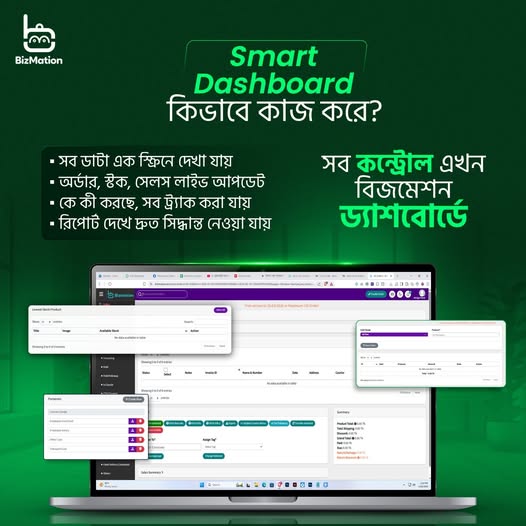
Manage all orders from one dashboard
Use a single inventory system (so you never oversell)
Print shipping labels for all couriers (local and international)
Send automatic follow-up messages or review requests
Your business can now handle double or triple the order volume, with the same staff.
A smooth ecommerce workflow is key to scaling your business. Automation helps you create clear, repeatable processes.
Document Each Step: Make a checklist for every process—order taking, packing, shipping, returns. This helps you train new staff quickly and avoid confusion.
Remove Manual Tasks: Find steps that can be automated, like data entry or label printing. Even automating small steps can make a big difference over time.
Set Up Triggers: For example, when an order is shipped, send a notification automatically. You can also trigger marketing emails after a purchase.
Monitor Performance: Use dashboards to see where delays or errors happen. Most automation tools offer analytics, so you can track performance.
Review Regularly: Update your processes as your business grows. Automation is not a “set and forget” solution—keep improving.
You can also set up standard operating procedures (SOPs) for your staff, so everyone knows how to handle exceptions (like failed payments or damaged items).
Customer places order
System sends confirmation email
Inventory updates automatically
Order routed to warehouse
Shipping label printed
Courier picks up parcel
Tracking info sent to customer
Sale recorded in accounts
With automation, each step happens with little or no manual work. If a problem occurs (like out-of-stock), the system can alert you or offer alternatives to the customer.
Returns are a headache for many Bangladeshi stores. Automation can help by:
Generating return labels
Updating inventory automatically when returns arrive
Sending refund notifications
Collecting feedback on why the item was returned
By automating returns, you keep customers happy and avoid stock mistakes.
If you sell on Facebook, Daraz, and your own website:
Orders from all channels are collected in one system
Inventory is updated for every channel in real-time
Shipping labels are printed for each courier
Profits and expenses are tracked centrally
This integrated workflow means you never miss an order or oversell a product.
Growth brings new challenges. As you get more orders, manual work becomes impossible. Scalable automation lets you handle 10 or 10,000 orders with the same team.
Integrate All Systems: Connect your store, inventory, shipping, and accounts. This reduces manual data entry and errors.
Use Cloud-Based Tools: These work from anywhere, on any device. Your team can manage the business from home or the office, which is important during strikes or lockdowns.
Automate Inventory Reordering: Stock never runs out, and you avoid over-buying. Your system can send alerts when products are low, or even place orders with suppliers automatically.
Outsource Non-Core Tasks: Use fulfillment centers or automation agencies for packing and delivery. This frees up your time for marketing or product development.
Monitor KPIs: Track key metrics (like order processing time) to spot problems early. Automation tools let you set up dashboards for real-time monitoring.
For example, if your average delivery time goes up, you can quickly check which courier is slow and switch providers.
Use batch processing to group orders by location for faster delivery.
Automate supplier payments and invoice matching to avoid missed payments.
Create automated workflows for product launches, so new items go live on all channels at once.
Without automation, you need more staff and make more mistakes. With automation, your existing team can handle growth smoothly. For example:
Marketing sends targeted offers to the right customers
Orders are processed and shipped without delay
Returns and refunds are tracked automatically
A real example: A Bangladeshi electronics retailer grew from 300 to 2,000 orders per month in one year by automating order processing, shipping, and accounting. They kept the same staff and avoided overtime costs.
During major sales events (like Black Friday or Pahela Baishakh), order volumes can spike. Automation lets you:
Handle hundreds of orders per hour
Update stock and prices in real-time
Automatically stop accepting orders when stock runs out
Choosing Tools That Don’t Integrate: Always check if your software can connect. If your shipping tool does not talk to your store, you will end up doing double work.
Not Training Staff: People need to understand how to use new systems. Invest in training and create clear guides.
Ignoring Data Security: Protect customer data with secure systems. Use strong passwords, back up your data, and follow local data protection rules.
Trying to Automate Everything at Once: Start with the most painful tasks. Too much change at once can confuse your team.
Not Reviewing Workflows Regularly: As your business grows, review and adjust your automation processes.
Selling on big platforms like Amazon and Walmart is popular for Bangladeshi sellers. These platforms offer their own automation features, but you can do even more.
Order Syncing: Orders from Amazon appear automatically in your system. No need to enter order details by hand.
Inventory Sync: Stock levels update across all platforms instantly. If you sell out on your website, Amazon is updated too.
Automated Repricing: Adjust prices to stay competitive. Some tools scan competitor prices and change yours automatically.
Feedback Requests: Send automated emails for reviews, which helps you grow your reputation.
You can also automate returns and refunds, making the process faster for buyers.
Bulk Listing: Add products in bulk, saving time. If you have 100 items, you can upload them all at once.
Order Routing: Send orders directly to the right warehouse. This is helpful if you ship from multiple locations.
Shipping Integration: Print Walmart-approved labels and update tracking. This keeps your seller rating high.
Some tools also help you match Walmart’s strict shipping and packaging requirements.
Reach millions of customers without building your own website. Amazon and Walmart handle marketing and customer service for you.
Use automation tools for marketing, shipping, and order management. This lets you compete with sellers from the US, China, and India.
Reduce manual work and errors, even with high order volumes. You can handle global sales from your office in Dhaka or Chattogram.
Many Bangladeshi sellers use fulfillment centers in the US or UK. Automation tools can connect your store to these centers and handle shipping, returns, and customer messages.
Automated translation tools can help you sell in multiple languages, expanding your reach even more.
Using third-party automation tools can bridge the gap between your local systems and global platforms. For example, you can connect your local inventory with Amazon FBA, so stock updates are instant.
Automated feedback requests on Amazon can double your positive reviews, building trust faster. Many new sellers forget to ask for reviews, but automation makes this easy.
Another tip: you can automate currency conversion and tax calculations for international sales, reducing headaches and mistakes.
If you want to automate your ecommerce business but don’t know where to start, Bizmation (bizmation.io) is a top choice in Bangladesh.
Bizmation is an ecommerce automation agency that helps online businesses save time, reduce errors, and grow faster. They offer smart solutions that cover all key areas of automation.
Bizmation also offers consulting and training to help you get the most from your systems. Whether you sell on a website, Facebook, or marketplaces, Bizmation can design a solution for your needs.
Inventory Management: Track stock across multiple channels, avoid out-of-stock issues, and automate reordering. No more spreadsheets or manual counting.
Fraud Order Filtering: Identify and block fake or risky orders before they cost you money. This is especially useful for stores that offer cash-on-delivery.
One-Click Landing Pages: Launch new products or promotions with ready-made, high-converting landing pages. You can test new ideas quickly and cheaply.
Order Routing: Automatically send orders to the right warehouse or supplier. This reduces shipping costs and speeds up delivery.
Integrated Shipping: Print labels, choose couriers, and send tracking info effortlessly. Bizmation supports local couriers like Pathao, Sundarban, and RedX.
Automated Accounting: Connect sales and expenses to your accounting software for real-time reports. You can see your profits and losses any time.
Marketing Automation: Run email, SMS, and social campaigns from one dashboard. No need to switch between different tools.
Bizmation also offers analytics, so you can see which products, ads, or locations are most profitable.
Local Expertise: Bizmation understands the needs of Bangladeshi stores. They know about local payment methods, couriers, and buyer habits.
Affordable Plans: Options for small startups and large retailers. You don’t need a big budget to start automating.
Easy Integration: Works with Shopify, WooCommerce, and local courier services. You can start with your current website and add more features as you grow.
Support and Training: Get help to set up and optimize your automation. Bizmation’s team can train your staff and troubleshoot any problems.
Bizmation also offers custom solutions. If you have a unique workflow, they can build a system just for you.
A Dhaka-based fashion retailer partners with Bizmation. They automate order processing, shipping, and returns. In three months, their order errors drop by 80%, delivery times improve, and they double their sales without hiring extra staff.
Another example: A gadget seller automates Facebook orders, integrates with local couriers, and connects to QuickBooks for accounting. Their daily order processing time drops from 4 hours to 30 minutes.
Bizmation’s fraud filtering can save you thousands per year, especially if you offer cash-on-delivery. Many stores lose money on fake or prank orders—automation can block these before they cost you money.
One-click landing pages let you test new product ideas without hiring a developer. You can launch a seasonal offer or flash sale in minutes.
Bizmation’s analytics can show you which products have the highest return rate or which areas have frequent delivery problems, so you can fix issues quickly.
Bizmation also stays updated with Bangladeshi e-commerce laws and can help you stay compliant with VAT and data protection rules.
Automation is not just theory—it works in the real world. Let’s look at some numbers and practical examples.
Here’s a closer look at how automation saves time in common ecommerce tasks:
|
Task |
Manual Time (per 100 orders) |
Automated Time (per 100 orders) |
Time Saved |
|---|---|---|---|
|
Order Entry |
5 hours |
30 minutes |
4.5 hours |
|
Shipping Label Printing |
3 hours |
20 minutes |
2.7 hours |
|
Inventory Updates |
4 hours |
15 minutes |
3.75 hours |
|
Accounting Entry |
6 hours |
30 minutes |
5.5 hours |
Over a month, that’s more than 60 hours saved on just 400 orders—a full week of work.
Reduced errors: Each mistake can cost you a refund, a lost customer, or a bad review.
Faster shipping: Orders shipped faster have fewer cancellations and more repeat buyers.
Lower staff costs: You can manage more orders without hiring more people.
A Chattogram-based electronics store moved to automation. Before, they needed three staff to process 100 orders a day. After automation, one staff member could handle 400 orders with fewer errors and faster delivery. This reduced their wage bill and made it easier to handle sales peaks.
A clothing brand running flash sales found that automation cut their order processing time from 2 days to 2 hours, letting them ship products before competitors.
|
Step |
Manual Process |
Automated Process |
|---|---|---|
|
Order Processing |
Manual entry, high error risk |
Auto-sync, error alerts |
|
Shipping |
Phone/email to courier |
One-click label, tracking |
|
Inventory |
Spreadsheet updates |
Real-time sync |
|
Accounting |
Manual entry, delayed reports |
Instant updates, live reports |
A beauty products retailer in Sylhet used automation to send personalized SMS offers during Eid, increasing sales by 30%.
A furniture seller automated return handling, reducing refund disputes by 70% and improving their Facebook rating.
Picking the right tools is important. Here’s what to look for:
Integration: Can the tool connect to your website, payment gateway, shipping, and accounting? Poor integration means more manual work.
Ease of Use: Is the dashboard clear and simple? Can staff learn it in a day?
Support: Is local support available if you have issues? In Bangladesh, local support means faster problem-solving.
Cost: Are there affordable plans for your business size? Look for free trials and no hidden charges.
Security: Does it protect your customer and business data? Ask about backups and data protection policies.
Mobile Access: Can you manage your business from your phone?
Customization: Can you adjust workflows to fit your needs?
Reporting: Does the tool offer clear, useful analytics?
Shopify and WooCommerce (for store automation)
Mailchimp, local SMS platforms (for marketing)
ShipStation, AfterShip (for shipping)
Bizmation (all-in-one local solution)
Local payment gateways (like bKash and Nagad) also offer plugins for automation.
Using too many separate tools that do not “talk” to each other. Integration is key.
Choosing the cheapest option without checking features or support.
Not reading reviews or asking for demos before buying.
Ignoring hidden costs, like extra charges for SMS or support.
Ask for a live demo before buying any tool.
Try automation on a few orders before switching your whole business.
Join online groups or forums to share experiences and get recommendations.

Ecommerce automation is growing fast in Bangladesh. As more businesses go online, automation tools will become even smarter.
AI-Powered Chatbots: Automate customer service 24/7. Chatbots can answer FAQs, take orders, and solve problems without human help.
Personalized Marketing: Use data to send the right offer to the right person. AI can predict what each customer wants next.
One-Click Checkout: Make buying faster and easier for customers. This reduces abandoned carts.
Smart Inventory Systems: Predict what you need to reorder before running out. AI can spot trends and forecast demand.
Cross-Channel Selling: Manage all platforms (website, Facebook, Amazon) from one dashboard.
Voice Commerce: Customers order by speaking to their phone or smart speaker.
Augmented Reality (AR): Let buyers “try” products virtually before buying.
Automated Video Marketing: AI creates product videos from your photos and descriptions.
Some stores now use AI to suggest products and answer questions instantly. For example, if a customer asks about shoe sizes, the chatbot can recommend the right fit based on previous orders.
AI can also analyze customer reviews and suggest improvements to your products or service.
Automation will not replace people completely. You still need a human touch for business strategy, creativity, and problem-solving. But by automating routine work, you free up time for bigger goals.
In fact, the best businesses use automation to support their team, not replace them. Use automation for the boring, repetitive work, and let your staff focus on building relationships and growing your brand.
Ecommerce automation is the use of software to handle repetitive tasks in your online store. It works by connecting different systems—like your website, inventory, shipping, and accounts—so that when a customer places an order, everything happens automatically, from sending confirmation emails to updating stock and printing shipping labels.
Yes. Many tools let you automate order taking, messaging, and inventory updates even if you sell mainly through Facebook or Instagram. For more advanced features, connecting to a platform like Shopify or using a service like Bizmation helps you automate even more.
You can also use chatbots to answer customer questions, collect orders, and send payment reminders.
Costs vary based on your needs and store size. Some tools are free or start from a few thousand taka per month. Agencies like Bizmation offer flexible pricing for different business sizes. Automation usually pays for itself by saving time and reducing errors.
Not always. Automation reduces boring, repetitive work, so your staff can focus on customer service, marketing, or new products. It lets you grow without hiring a big team, but you still need people for creative and strategic tasks.
You can read guides on trusted sites like Shopify Encyclopedia for more details. For local help, agencies like Bizmation offer free consultations and demos.
If you want your online business in Bangladesh to grow faster, work smarter, and avoid costly mistakes, it’s time to embrace automation. From marketing and orders to shipping and accounting, automation tools are now essential for success. You do not need to do everything alone—let smart systems handle the routine, so you can focus on what matters most.
Bizmation is ready to help you build a modern, automated ecommerce business that’s easy to scale. With inventory management, fraud filtering, and one-click landing pages, you get everything you need in one place. Don’t wait for your competitors to get ahead. Automate your ecommerce with Bizmation for smarter growth and a brighter future. Visit bizmation.io today to get started.
Automation is your key to joining the next generation of successful Bangladeshi ecommerce businesses. Start small, learn as you go, and soon you’ll wonder how you ever managed without it.