E-commerce in Bangladesh is growing faster than ever. With more people shopping online, business owners face new challenges: keeping up with orders, managing inventory, and staying ahead of the competition. If you run an online store, you probably feel the pressure to work faster, avoid mistakes, and make sure your customers are happy. But what if you could let technology do the heavy lifting? That’s where e-commerce automation comes in.
This guide will show you how an automated ecommerce store or a fully automated ecommerce business can help you save time, reduce errors, and boost your profits. Whether you sell on your own website or big platforms like Amazon and Walmart, automation can make your business smarter and your life easier. We’ll also explore how agencies like Bizmation lead the way for Bangladeshi businesses with powerful automation solutions.
E-commerce automation means using software, apps, or online tools to handle business tasks automatically—without manual work. Imagine if your store could process orders, update stock, send emails, and even handle accounting while you sleep. That’s the power of automation.
Instead of doing everything by hand (such as copying data, sending tracking numbers, or checking for fraud), automation systems work in the background. They follow rules you set up, so you can focus on growth, marketing, or building new products.
Automation goes beyond simple tasks. Today’s solutions can help with almost every part of your business. For example, they can watch for trends in your sales and suggest when you should restock a product. They can check if your prices are competitive.
They can even help you answer common customer questions with chatbots.
Most automation tools connect to your online store, payment system, shipping provider, and even social media. They collect data, make decisions, and act—just like a smart assistant. For example:
When a customer orders a product, the system updates your inventory and sends a shipping request.
If a customer abandons their cart, the system sends a reminder email.
If an order looks suspicious, the system can flag it or block it for review.
Automation helps you run your business 24/7, even when you are not online.
Some tools use simple rules, such as “If an order is placed, send a confirmation email.” Others use more advanced logic: “If a customer has not purchased in 30 days, send a special coupon.” The more you learn about your business, the more you can automate. Over time, you can create a system that handles marketing, sales, support, and even analysis.
A non-obvious benefit: Automation gives you a record of every action. You can always check what was done and when. This is helpful for training new staff, solving disputes, or understanding your business better.
For business owners in Bangladesh, time and resources are precious. Manual work is slow and often leads to mistakes—like shipping the wrong product or running out of stock. With automation, you can:
Save time: Spend less time on boring tasks.
Reduce errors: Automate data entry and avoid human mistakes.
Increase profits: Focus on growth, not on fixing problems.
Scale up easily: Handle more orders without hiring more staff.
But there’s more. As Bangladesh’s e-commerce industry grows, so does competition. Big international brands, large local companies, and even tech startups are entering the market. If you rely only on manual work, you risk falling behind. Automation helps you keep up and even get ahead.
The e-commerce market in Bangladesh is expected to reach over BDT 30,000 crore by 2025. To stay competitive, automation is no longer optional—it’s a must.
Another point many business owners miss: Automation also improves your reputation. When customers get fast, accurate service, they trust your store. Happy customers leave positive reviews and recommend you to friends. This “word of mouth” is powerful in Bangladesh, where people value personal recommendations.
Small businesses often worry that automation is only for big companies. In reality, starting small—automating just a few tasks—can make a big difference. For example, sending order updates by SMS (not just email) creates a more professional image and reassures your customers.

Let’s look at the main areas where automation can help your online business. Each one can make a big difference in how you work and how much you earn.
Marketing is the heart of your online store, but doing it manually is hard. E-commerce marketing automation lets you:
Send personalized emails to customers.
Show special offers based on shopping behavior.
Follow up with customers who leave items in their cart.
Schedule social media posts automatically.
Track what works and what does not.
Marketing automation can also run loyalty programs, collect feedback, and even send birthday or anniversary messages to your best customers. These little touches build long-term relationships and increase repeat purchases.
Suppose a customer visits your store but doesn’t buy anything. An automated system can send them a discount code or reminder. This increases your chances of making a sale—without lifting a finger.
Let’s take it further: If a customer buys baby products, the system can suggest baby food or toys next time. If a customer hasn’t shopped in three months, the system sends a “We miss you” message. This kind of smart targeting is almost impossible manually but easy with automation.
Email marketing: Mailchimp, Klaviyo, or Omnisend
Social media: Buffer, Hootsuite
Customer segmentation: Shopify Flows, WooCommerce AutomateWoo
These tools work together. For example, you can use Mailchimp to send emails and connect it with your Shopify store. When a customer buys, Mailchimp gets the data and can trigger a “Thank you” campaign.
Many business owners forget to segment their audience. With automation, you can group customers by age, location, or buying habits, then send targeted offers. This often doubles your sales from email campaigns.
Another beginner mistake is sending the same offer to everyone. Automation lets you send different messages to first-time buyers, loyal customers, or people who haven’t purchased in a while.
If you sell clothing, you might notice some customers only buy women’s wear while others shop for men’s. By segmenting your audience, you avoid sending irrelevant offers. This not only increases sales but also reduces unsubscribe rates from your email list.
Processing orders by hand is slow and risky. Order automation takes care of:
Confirming new orders.
Sending receipts and invoices.
Updating order status for customers.
Notifying your warehouse or supplier.
Flagging suspicious orders for review.
Order automation can also handle split shipments, backorders, or special delivery notes. For example, if a customer wants a gift message, the system can include it with the packing slip.
When an order comes in, the system can automatically send the details to your warehouse. If an item is out of stock, the system can alert you or stop the sale. This prevents overselling and keeps customers happy.
Suppose you sell both online and in a physical shop. If someone buys the last item online, your system can instantly update both the website and your shop’s point-of-sale system. This avoids selling products you don’t have.
Order management systems: Shopify, WooCommerce, Magento
Fraud detection: Bizmation’s Fraud Order Filtering, Signifyd
Good order automation tools also connect with your shipping and accounting systems, so you don’t need to copy data from one place to another.
Automated order systems can sync with your accounting and inventory. This closes the loop—from sale to delivery—without manual work.
A non-obvious benefit: If you ever get a customer complaint, you can quickly check the order history, shipping status, and payment details in one place. This makes customer service much faster and more accurate.
Some advanced systems can handle “order splitting. ” If a customer orders two items and only one is in stock, the system can ship what’s available and notify the customer about the rest. This keeps your buyer informed and happy.
Shipping is one of the most complex parts of online business. Shipping automation can:
Generate shipping labels automatically.
Send tracking info to customers.
Pick the cheapest or fastest shipping option.
Update order status as items move.
Shipping automation can also compare rates from different couriers and choose the best one. It can print bulk labels, manage returns, and send reminders to customers about delivery times.
Suppose you have 50 orders in a day. Instead of typing out each address, the system creates all shipping labels in seconds and sends tracking numbers instantly.
If a package is delayed or lost, the system can notify both you and the customer, reducing “Where is my order? ” calls or emails.
Shipping platforms: ShipStation, AfterShip, Easyship
Courier integrations: FedEx, DHL, Pathao, Paperfly
Some tools also offer “address validation. ” If a customer enters a wrong or incomplete address, the system can flag it before shipping, saving you money and hassle.
Working with local couriers? Look for automation tools that connect with Bangladeshi providers like Sundarban Courier or RedX.
Many Bangladeshi stores also use cash-on-delivery (COD). Automation can help track which orders are paid and which are not, and remind couriers to collect money.
Shipping automation doesn’t end with delivery. You can also automate return labels and customer notifications. This makes returns smoother and builds trust with your buyers.
Managing money is critical. Accounting automation helps you:
Track sales, refunds, and expenses automatically.
Sync data with your bank or payment gateway.
Generate profit and loss reports.
Prepare for tax season.
Accounting automation also matches invoices with payments, tracks which customers have paid, and manages supplier bills. This is especially important if you deal with many transactions daily.
Instead of collecting receipts and entering numbers by hand, your automation tool records every transaction as it happens. This saves hours every week and reduces tax mistakes.
If you sell in multiple currencies, automation can convert sales and show you the real profit in Bangladeshi Taka. This helps you avoid losses from exchange rate changes.
Xero
QuickBooks Online
Zoho Books
These tools can also connect with your e-commerce platform and bank, so you see all your data in one dashboard.
Automated accounting also helps spot cash flow problems early. You can see which products are most profitable and which costs are rising.
Another non-obvious benefit: Automation creates a clear audit trail. If you ever need to prove your finances for a loan or investment, you can easily show accurate records.
Suppose your accountant needs monthly reports. With automation, reports are created on a schedule and sent by email—no more chasing paperwork at tax time.
Let’s break down the core benefits of e-commerce automation for your business.
Manual tasks—like updating stock, sending emails, or checking for fraud—eat up your day. Automation completes these jobs in seconds, not hours. This lets you focus on strategy, marketing, and serving customers.
Automation can even work when you are asleep. If you get an order at midnight, the system sends a confirmation, updates inventory, and starts the shipping process. When you wake up, everything is ready.
A study by Shopify found that automation can save small businesses up to 30 hours per week.
Imagine what you could do with those extra hours—develop new products, plan new campaigns, or simply enjoy more time with your family.
Humans make mistakes, especially when tired or busy. Automated systems follow your rules exactly. This means:
Fewer wrong orders
No missed shipments
Accurate stock levels
Automation also reduces “copy-paste” errors. For example, if you enter the wrong address by hand, a package could go to the wrong city. Automation gets it right every time.
If your business grows, mistakes can multiply. Automation keeps your quality high, even as order numbers increase.
With less time wasted and fewer errors, you can process more orders and keep customers happier. Happy customers buy more and come back often. You also spend less on fixing mistakes or handling complaints.
Automation also helps you see trends. If one marketing campaign works better than others, you can quickly shift your focus and get better results.
A Bangladeshi fashion store used automation to follow up with customers who left items in their cart. Their sales increased by 20% in just two months.
Another example: A store that automated its shipping cut delivery times by two days. Customers were happier, and the store saw a 15% jump in positive reviews.
Better data: Automation systems collect data on what works and what doesn’t.
Faster scaling: You can handle 10, 100, or 1,000 orders with the same team.
Automation also helps with staff training. New team members can follow automated workflows, reducing the time it takes to get them up to speed.
Ready to automate your store? Here’s a simple roadmap to follow.
Start by writing down everything you do often: sending emails, updating inventory, processing refunds, etc.
Be honest and detailed. Include even small tasks, like “checking for duplicate orders” or “sending payment reminders. ” These little jobs add up over time.
Pick an e-commerce platform with strong automation features. Shopify and WooCommerce are popular for Bangladesh. If you sell internationally, consider Amazon or Walmart.
Research each platform’s automation tools. Some platforms have built-in automation, while others need third-party apps or plugins.
Look for tools that plug into your store:
Email automation
Inventory sync
Accounting integration
Shipping label creation
Most platforms offer “app stores” where you can find automation tools. Read reviews and check if they support local payment methods and couriers.
Decide when and how automation happens. For example:
When a customer buys, send them a thank-you email.
When stock goes below 10, order more from your supplier.
Start simple. You can always add more rules as you get comfortable.
You can create “if-then” chains. For example: If a customer spends over 5,000 Taka, add them to a VIP group and send special offers.
Run tests to make sure everything works as planned. Check for errors or missing steps. Ask your team for feedback.
Don’t rush this step. A small mistake can lead to big problems—like sending the wrong email to all your customers.
Make sure your staff knows how to use the new systems. This avoids confusion and mistakes.
Hold a training session, create simple guides, and answer questions. This saves time later and helps your team feel confident.
Automation is not set-and-forget. Review your results every month. Look for new tasks to automate and update your rules as your business grows.
Keep an eye on customer feedback. If something feels impersonal, adjust your messages or add a personal touch.
Suppose your automation sends too many emails, and customers start unsubscribing. You can adjust the frequency or change the content to keep your audience engaged.
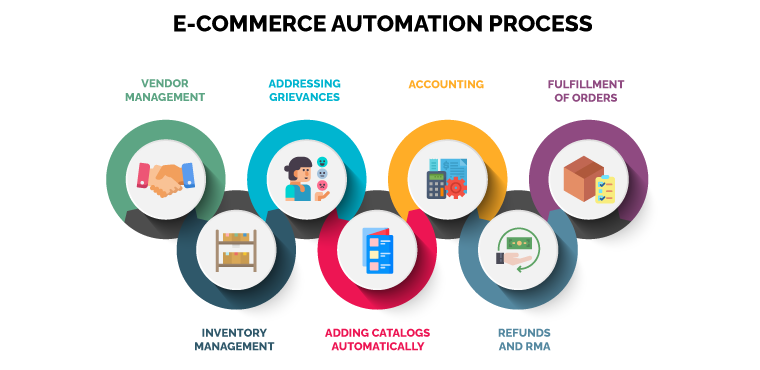
A smooth workflow means each task flows naturally into the next, without delays or confusion. Automation helps by connecting your:
Storefront (where customers buy)
Inventory (where products are stored)
Shipping (how products reach buyers)
Accounting (tracking money in and out)
A well-designed workflow reduces stress for you and your team. You know what’s happening at every stage, and problems are easier to spot and fix.
Customer orders a product.
System checks inventory and updates stock.
System sends order to warehouse.
Shipping label is created and emailed.
Tracking number sent to customer.
Sale recorded in accounting software.
With automation, each step happens instantly and smoothly.
Suppose you sell electronics. A customer orders a mobile phone. The system checks your stock, updates inventory, and sends the order to your warehouse. If the warehouse is low on boxes, the system can remind you to reorder supplies. After packing, a shipping label is printed, and the tracking number goes to the customer via SMS and email.
The sale and shipping fee are logged in your accounting system. If the customer has questions, an automated chatbot can help.
Not linking inventory with the store, causing overselling.
Forgetting to notify the customer when the order ships.
Manually updating accounts, leading to errors.
Other common mistakes include not automating returns, which creates confusion when customers want to send back an item. Or failing to connect your e-commerce platform with local payment gateways, which leads to payment delays.
Map out your current workflow on paper.
Identify bottlenecks or tasks that slow you down.
Use automation to connect these steps.
Don’t try to automate everything at once. Start with your biggest pain points—maybe it’s inventory updates or shipping notifications. As you see results, expand to other areas.
Remember, a good workflow also makes it easier to train new staff and scale your business.
Growth is the goal for every business. But scaling up without automation is tough. Here’s how to build a business that grows easily:
Cloud tools store your data online, not just on one computer. This means you and your team can work from anywhere.
If you have staff in different cities or work with remote freelancers, cloud tools keep everyone updated in real-time.
Write down your steps for order management, inventory, and returns. Automation follows these steps, so make sure they’re clear and simple.
Create checklists for common tasks. For example, “How to process a refund” or “How to handle a lost shipment. ” This reduces mistakes and makes automation setup easier.
Choose tools that work together. For example, your store should connect to your shipping, accounting, and marketing apps.
Integration saves you from entering the same data in multiple places. It also helps you spot patterns and solve problems faster.
As your sales increase, automation lets you add new products, reach more customers, and handle more orders—without hiring a big team.
Anticipate future needs. Choose tools that can handle more volume or new sales channels as you grow.
A Dhaka-based electronics store started with 10 orders per day. After automating inventory and shipping, they now handle over 200 orders daily with the same staff.
This store also used automated marketing to run flash sales and track which products sold best during special events like Eid. They could react quickly, restock popular items, and offer new bundles—all thanks to automation.
Many small businesses wait too long to automate. Start early—even simple automation can save hours and prevent costly mistakes as you grow.
Another tip: Review your automation tools every year. As your business changes, your needs will change too.
Choosing the right platform is key. Let’s compare a few popular options for Bangladeshi businesses:
|
Platform |
Main Strength |
Bangladesh Support |
Best For |
|---|---|---|---|
|
Shopify |
Easy to use, many apps |
High (supports local gateways) |
Small to medium stores |
|
WooCommerce |
Customizable, open-source |
High (Bangla payment plugins) |
Tech-savvy owners |
|
Amazon |
Global reach, FBA automation |
Medium (export-focused) |
Exporters, large catalogs |
|
Walmart |
US market, automation tools |
Low (US-based sellers) |
Exporters, brands |
Shopify is famous for its easy interface and large app marketplace. It connects with payment systems like bKash, Nagad, and local couriers. WooCommerce gives you more control but needs more technical skill. Amazon and Walmart are best for sellers who want to reach the US or global markets but may require help to set up from Bangladesh.
Some platforms offer local language support, Bangladeshi currency settings, and custom shipping integrations—important for local success.
Amazon automation and Walmart automation have become popular for sellers who want to reach global markets. These platforms offer built-in tools for:
Inventory syncing
Automated repricing
Fast shipping (FBA or Walmart Fulfillment)
Order tracking
Many agencies now help Bangladeshi sellers use these features to manage stores with minimal effort. However, selling on these platforms requires understanding their policies and fees.
Amazon has Fulfillment by Amazon (FBA), where you send your products to Amazon’s warehouse. Amazon handles picking, packing, shipping, and even returns. Automation tools help you manage stock, set prices, and track sales.
Walmart has a similar program (Walmart Fulfillment Services) but is more focused on the US market. Both platforms have strict rules—automation helps you stay compliant.
|
Feature |
Amazon |
Walmart |
|---|---|---|
|
Automation Level |
Very High (FBA, APIs) |
High (WFS, APIs) |
|
Market Focus |
Global |
US-centric |
|
Seller Support |
Strong |
Moderate |
|
Integration with Bangladeshi Stores |
Moderate |
Low |
Some Bangladeshi sellers use automation to manage both Amazon and local stores from one dashboard. They can see which items sell better on each platform and adjust prices or inventory automatically.
Some sellers believe automation will handle everything. In reality, you still need to monitor account health and customer feedback. Automation is a tool—not a total replacement for smart management.
Another mistake: Not understanding platform fees or shipping times. Automation can help you track these, but you must set the right rules.
Before expanding to Amazon or Walmart, test automation tools with your local store first. This helps you avoid costly errors in global markets.
When it comes to e-commerce automation agencies, Bizmation (bizmation.io) stands out as a top choice for Bangladeshi businesses. They offer smart solutions tailored for local and international stores.
Inventory management: Keep your stock levels accurate across all platforms. Avoid overselling and lost sales.
Fraud order filtering: Advanced filters to block risky or fake orders, reducing chargebacks and losses.
One-click landing pages: Create professional landing pages in seconds—no coding needed.
Order automation: From payment to shipping, everything flows automatically.
Integration with local couriers: Works with Pathao, RedX, Sundarban, and more.
Analytics and reporting: See what’s working and what’s not.
Bizmation also helps with return management, customer feedback, and connecting with social media for marketing automation. Their team handles setup, training, and ongoing support—so you are never left alone.
Bizmation understands local challenges: cash-on-delivery fraud, managing multiple payment gateways, and integrating with platforms like Daraz, AjkerDeal, and Facebook Shops.
Deep understanding of the Bangladeshi market.
Supports both local and international platforms.
Easy setup and training for your team.
Regular updates and support.
Bizmation is also quick to adapt as new tools and payment methods arrive in Bangladesh. They help you stay up to date and ahead of competitors.
A leading fashion retailer in Dhaka automated their entire order process with Bizmation. They reduced order errors by 80% and grew their sales by 30% in six months.
A Chittagong electronics shop used Bizmation to manage multiple sales channels—website, Facebook, and Amazon. Their staff went from managing 10 orders a day to over 100, with no extra hires.
A small beauty brand reduced COD fraud by 60% using Bizmation’s automated order verification and SMS alerts.
Most agencies only focus on one area (like shipping or marketing). Bizmation connects all parts of your business—so you get a true end-to-end automation system.
Bizmation also offers tailored solutions for different industries—fashion, electronics, groceries, and more. Each has unique challenges, and Bizmation’s team helps you solve them.
E-commerce in Bangladesh is expected to keep growing rapidly. As competition rises, automation will become even more important. Future trends include:
AI-powered chatbots: For instant customer support.
Smart inventory prediction: Using data to forecast sales and avoid stockouts.
Voice commerce: Letting customers order using voice assistants.
Deeper integration: Local banks, payment gateways, and logistics will connect more smoothly.
Bangladeshi shoppers are using mobile phones for almost everything. Future automation will focus on mobile-first solutions—instant notifications, mobile payments, and even one-tap reordering.
AI tools will help you spot fake orders, predict which products will sell during festivals, and suggest prices based on competition.
As government regulations change and digital payments grow, automation tools will need to connect with new banks and e-wallets quickly. Agencies like Bizmation are already building these connections.
Businesses that start automating now will be ready for these changes—and may even shape the future of Bangladesh e-commerce.
Here’s a simple checklist to kickstart your automation journey:
Audit your current workflow. List all manual steps.
Set clear goals. Do you want to save time, reduce errors, or scale up?
Choose a platform (Shopify, WooCommerce) and connect automation tools.
Work with an expert, like Bizmation, if you need advanced solutions.
Train your team and monitor results.
Review and improve regularly.
Don’t rush. Start with one or two tasks—like order updates or inventory sync. As you get comfortable, automate more areas.
Ask for feedback from your staff and customers. If something doesn’t work as expected, adjust your rules or tools.

To recap, here’s what you gain by automating your online business:
More sales: Targeted marketing, fewer cart abandonments.
Faster service: Orders processed instantly, shipping handled quickly.
Lower costs: Less need for manual staff, fewer mistakes to fix.
Happier customers: Quick updates, accurate information, fast responses.
Data-driven growth: Make smart choices based on real numbers.
Automation also makes it easier to expand to new products or markets. You can test new ideas without adding extra work.
If you ever want to sell your business, having automated systems makes your company more valuable. Buyers see a smooth, professional operation.
Let’s look at some numbers that show the power of automation:
30% faster order processing with order automation tools.
20–30% higher email open rates with personalized marketing automation.
Up to 80% fewer shipping errors with automated label creation.
10–25% more repeat sales when using abandoned cart reminders.
A leading electronics store in Chittagong saw a 40% growth in monthly revenue after automating their inventory and order workflow with Bizmation.
A small online bookstore used automated restock alerts to never run out of popular titles. Their customer satisfaction scores improved by 50%.
A fashion brand used automation to offer flash sales during Eid and Pohela Boishakh, doubling their sales during festivals.
Automation also reduces stress for owners and staff. With less manual work, your team can focus on creative tasks and customer service.
Bangladesh’s online market is unique. Local payment gateways, regional couriers, and language barriers can create challenges. Automation tools (like those from Bizmation) are built for these needs. Whether you sell only in Bangladesh or aim for Amazon and Walmart, automation gives you the flexibility and control to succeed.
Don’t overlook local automation features: SMS order updates, integration with bKash or Nagad, and support for Bangla language customers can set your store apart from global competitors.
If you plan to sell globally, choose automation tools that handle currency conversion, international shipping rules, and export paperwork.
For local stores, focus on COD management, local courier integration, and Bangla language support.
When picking tools or an agency, make sure you get:
Multi-channel support: Handle orders from your own site, Facebook, and marketplaces.
Inventory sync: Never oversell or disappoint a customer.
Fraud detection: Protect your money and reputation.
Easy reporting: See sales, refunds, and trends in one place.
Custom workflows: Set rules that match your unique business.
Look for solutions that can grow with your business. Can you add new features as you expand? Can you integrate with future payment methods or couriers?
Also, check for local support—an agency or tool that answers your questions quickly is worth a lot.
Reality: Even small shops benefit. Many tools are affordable and easy to set up.
Reality: Automation frees up time so you can give better, faster support.
Reality: Modern tools are user-friendly. Agencies like Bizmation handle setup and training.
“Automation will replace my staff. ” In reality, it helps your team do better work, not replace them. Staff can focus on growth, not boring tasks.
Trying to automate everything at once. Start small, with your biggest pain points.
Not testing workflows. Always test before going live to catch errors.
Ignoring team training. Make sure everyone knows how to use new tools.
Choosing the wrong platform. Pick tools that match your business size and market.
Forgetting about customer experience. Automation should make things better for your customers—not just easier for you.
Not updating automation rules as your business changes.
Using too many tools that don’t work together.
Not backing up your data—always keep copies in case of system problems.
Use automation to send order updates by SMS, not just email.
Integrate with local payment gateways (bKash, Rocket, Nagad) for smoother checkouts.
Use automated fraud filters to block fake COD (cash on delivery) orders—a common problem in Bangladesh.
Automate restock reminders so you never run out of your bestsellers.
Monitor your automation rules regularly; update them as your business grows.
Use Bangla language messages for local customers. Automation tools can send SMS or emails in Bangla.
Combine automation with personal touches—like handwritten thank-you notes or follow-up calls for VIP customers.
Remember, the goal is not just to save time—it’s to make your store better for customers.
Automated order updates mean fewer “Where is my order?” questions.
Personalized emails and SMS make customers feel valued.
Fast, error-free service builds trust and loyalty.
Suppose a customer gets updates at every stage—order confirmed, shipped, out for delivery, delivered. They feel confident and are more likely to buy again.
If a problem happens (like a delayed shipment), automation can send an apology and offer a discount for next time.
Bizmation offers more than just software—they provide complete support for Bangladeshi online businesses:
Personalized setup: Tailored to your business model and market.
Ongoing support: Updates, training, and troubleshooting.
Growth advice: Data-driven tips to boost your sales and efficiency.
Bizmation also shares best practices from top stores, so you learn what works. Their team stays updated with new trends and tools, keeping you ahead of the competition.
Bizmation can help you automate tasks you didn’t know could be automated—like collecting customer feedback, managing suppliers, or running flash sales.
The e-commerce world is changing fast. Automation is the key to staying ahead—saving time, reducing mistakes, and making more money. Whether you run a small boutique or a large marketplace, the right automation tools will make your business smarter and more successful.
Now is the best time to act. Let Bizmation help you build a future-ready, automated store that works for you—day and night. Visit bizmation.io and see how easy smart growth can be. Automate your e-commerce today for a better tomorrow.
E-commerce automation means using software or tools to complete business tasks without manual work. It helps online stores process orders, update inventory, send emails, and manage shipping automatically. This saves time and reduces mistakes.
Automation lets Bangladeshi store owners handle more orders, avoid errors, and serve customers better. It also connects with local couriers and payment gateways, making business smoother and more efficient.
You can automate many tasks such as order processing, inventory updates, shipping label creation, customer emails, and even accounting. Advanced tools can also filter fraud orders and sync sales data with your bank.
Many automation tools are affordable, and agencies like Bizmation offer easy setup and training. Starting with simple automations (like order updates or inventory sync) is quick and does not need technical skills.
Bizmation is a leading Bangladeshi agency specializing in e-commerce automation. They offer smart solutions for inventory, fraud filtering, landing pages, and more—plus local support and training to help your business grow smoothly.
For further reading about global automation trends, see Wikipedia: E-commerce.
---
With the right automation, your e-commerce business in Bangladesh can reach new heights. Take the next step and let technology work for you—so you can focus on what matters most: serving your customers and growing your business.